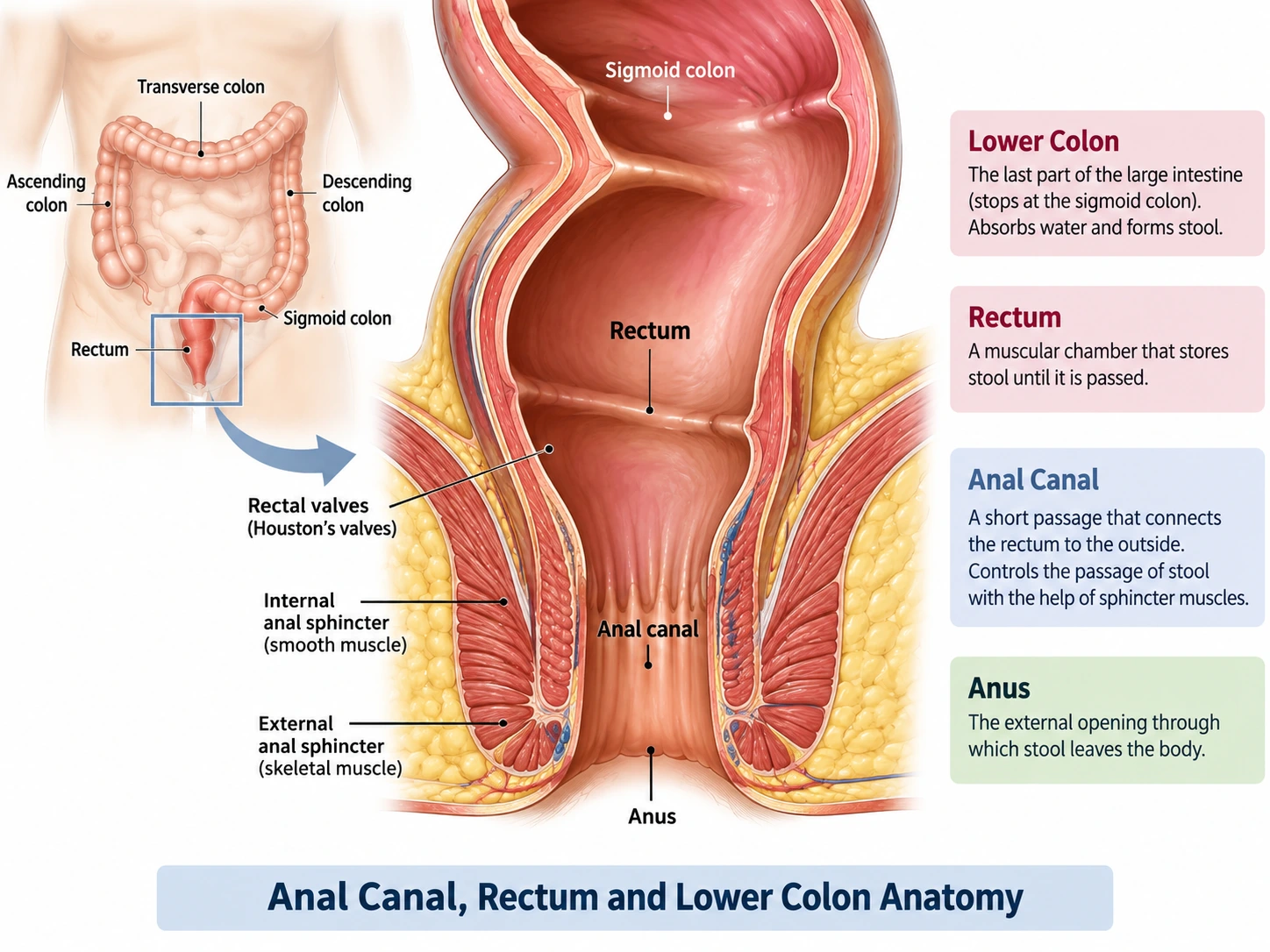
Rectal Bleeding Explained: Is It Piles, Fissure, Fistula, or Something More Serious?
Seeing blood after using the toilet can be frightening, especially when you don't know whether it's from piles, a fissure, or something that needs closer attention. It's a common search before people actually see a doctor, and understandably so — rectal bleeding is a sensitive topic many find awkward to discuss even with family.
The causes of rectal bleeding range from minor and easily treatable to conditions that need timely evaluation. Most cases turn out to be benign. But because several conditions can look similar on the surface, understanding the possibilities — and knowing when to get checked — matters more than guessing.
What Does Rectal Bleeding Mean?
Rectal bleeding simply means blood is passing from the anus, and it can appear in different ways depending on where it comes from.
Bright red blood usually comes from the lower digestive tract — the anus, rectum, or lower colon — since it hasn't had time to change colour. Dark red or maroon blood often points to a source slightly higher up. Black or tarry stool, sometimes with a strong odour, can indicate bleeding higher in the digestive tract, such as the stomach, where blood has been partially digested.
The colour and pattern of bleeding offer useful clues, but they don't confirm a diagnosis on their own. Two people with identical-looking bleeding can end up with different explanations after an examination.
Common Causes of Rectal Bleeding
Piles / Haemorrhoids
Piles, or haemorrhoids, are swollen blood vessels in and around the anal canal. They're among the most frequent reasons for rectal bleeding. Internal piles typically cause painless bleeding — often a bright red streak on the stool or noticed after wiping — because the swollen tissue sits higher up, where there are fewer pain-sensing nerves. External piles develop closer to the anal opening and are more likely to cause discomfort, itching, or a noticeable lump, along with occasional bleeding if irritated or thrombosed. You can read more about piles treatment options if this sounds familiar.
Anal Fissure
An anal fissure is a small tear in the lining of the anal canal, commonly linked to constipation and passing hard, dry stools. The hallmark symptom is a sharp, burning pain during or immediately after a bowel movement, sometimes lasting minutes to hours afterward. Bleeding from a fissure tends to be light — a small amount of bright red blood on the stool surface or toilet paper — rather than heavy. More detail on anal fissure treatment is available if the pain pattern matches.
Anal Fistula
An anal fistula is an abnormal tunnel that forms between the inside of the anal canal and the skin near the anus, often developing after an anal abscess has drained or been treated. Typical symptoms include persistent discharge (which may be blood-stained or pus-like), recurrent swelling, discomfort, and skin irritation around the opening. Because a fistula involves a tract that doesn't heal on its own, it generally needs specialist assessment rather than home management — see anal fistula treatment for how this is typically managed.
Constipation and Straining
Constipation doesn't directly cause bleeding, but repeated straining against hard stool puts pressure on anal tissue, making fissures and piles more likely — and more likely to bleed. Chronic straining is one of the most preventable contributors to rectal bleeding.
Other Digestive or Colorectal Conditions
Bleeding can also stem from causes further inside the digestive tract, including colorectal polyps, inflammatory bowel disease (such as ulcerative colitis or Crohn's disease), diverticular disease, infections, and, less commonly, colorectal cancer. These causes are less frequent than piles or fissures but are the reason doctors don't rely on appearance alone when bleeding is persistent or unexplained.
How to Tell the Difference Between Piles, Fissure and Fistula
| Condition | Typical Symptoms | Bleeding Pattern | Pain | Other Clues |
|---|---|---|---|---|
| Piles (Haemorrhoids) | Swelling, itching, a lump near the anus | Bright red, often painless (internal) | Usually mild or absent; more with external piles | May prolapse or protrude during straining |
| Anal Fissure | Sharp pain during/after bowel movements | Light, bright red streaking | Often severe, burning | Linked to constipation and hard stools |
| Anal Fistula | Recurrent swelling, discharge | Blood-stained discharge, not always with stool | Variable; may follow a prior abscess | Persistent opening or skin irritation near anus |
This table is a general guide, not a diagnostic tool — several conditions can overlap or occur together.
What Does Bright Red Blood After a Bowel Movement Mean?
Bright red blood after a bowel movement usually suggests the source is close to the anal opening, most often piles or an anal fissure. Local irritation from wiping too hard, or minor trauma to already-swollen tissue, can also cause similar bleeding. That said, bright red blood doesn't automatically mean piles — bleeding from higher in the lower colon can sometimes appear bright red too, particularly if bowel movements are frequent. When bleeding is a one-off and mild, it's often nothing urgent; when it repeats over several bowel movements, it's worth getting checked.
What Causes Painless Rectal Bleeding?
Painless rectal bleeding is most commonly associated with internal haemorrhoids, since the affected tissue has limited pain sensitivity. However, painless bleeding shouldn't be dismissed just because it doesn't hurt. Some colorectal conditions, including polyps and, in some cases, early colorectal cancer, can also cause bleeding without pain. The absence of pain tells you something about the likely location of the problem — it doesn't rule out the need for evaluation, especially if the bleeding is recurrent.
What Are the Common Blood on Toilet Paper Causes?
Among the common blood on toilet paper causes are haemorrhoids, anal fissures, and simple irritation from friction or wiping. Constipation and hard stools frequently contribute by putting extra strain on anal tissue. Occasionally, skin conditions or minor infections around the anus can also cause light bleeding. A single episode after a hard bowel movement is usually not a cause for alarm, but blood that keeps appearing over several days deserves a proper look.
Is Rectal Bleeding Piles or Cancer?
Most rectal bleeding is caused by benign conditions like haemorrhoids or fissures — cancer is not the most likely explanation for a typical episode of bleeding, particularly in younger people without other risk factors. That said, symptoms of piles and more serious colorectal conditions can overlap, and appearance alone cannot rule either one out.
Bleeding that may require further evaluation includes bleeding that persists beyond a couple of weeks, keeps recurring, changes in character, or occurs alongside other symptoms such as a change in bowel habits, unexplained weight loss, or unusual tiredness. Age, family history of colorectal cancer, and other individual risk factors also influence how quickly a doctor may recommend further tests. None of these signs confirm cancer on their own — they simply indicate that the bleeding should be assessed by a doctor rather than assumed to be piles.
When to Worry About Rectal Bleeding
Most cases of rectal bleeding are minor, but certain signs suggest the situation needs prompt medical attention. These include:
- Heavy or continuous bleeding
- Bleeding that keeps returning over days or weeks
- Black or tarry stools
- Dizziness, fainting, or unusual weakness
- Severe abdominal pain
- Unexplained weight loss
- A persistent change in bowel habits
- Signs of anaemia, such as constant fatigue or pale skin
- A family history of colorectal cancer
If bleeding is heavy, associated with dizziness, or doesn't settle, it's best treated as something to act on quickly rather than wait out — these situations warrant urgent evaluation rather than a wait-and-watch approach.
Blood in Stool When to See Doctor
You should consider seeing a doctor for blood in stool if bleeding is recurrent, heavy, painless but persistent, or accompanied by any of the red-flag symptoms above — even mild bleeding is worth mentioning at your next visit if it doesn't fully resolve within a couple of weeks.
During the consultation, a doctor will typically ask about how long the bleeding has been happening, how much blood is involved, its colour, your usual bowel habits, any constipation or straining, associated pain, unintended weight changes, family history of colorectal conditions, and current medications, including blood thinners. Based on this history, they'll decide what examination or tests, if any, are appropriate for your specific situation.
How Is Rectal Bleeding Diagnosed?
Diagnosis usually starts with a detailed history and a focused anorectal examination. Depending on findings, a doctor may recommend anoscopy or proctoscopy to view the anal canal and lower rectum directly, blood tests to check for anaemia, or stool tests if infection is suspected. For select patients — particularly those with red-flag symptoms or higher risk factors — a colonoscopy or further investigation may be considered. Not every patient needs every test; the approach depends on the suspected cause.
Rectal Bleeding Treatment in Bangalore
Treatment for rectal bleeding depends entirely on its underlying cause, which is why an accurate diagnosis comes first. For constipation-related bleeding, dietary changes, adequate fluids, and stool-softening measures are often the starting point. Anal fissures frequently respond to measures that ease straining and support healing, with procedures reserved for fissures that don't settle with conservative care. Haemorrhoids are managed based on their grade — ranging from lifestyle changes and medication for milder cases to minimally invasive or surgical options when piles are more advanced. If an anal fistula is confirmed, it generally requires a specific surgical approach rather than conservative management, since fistula tracts don't close on their own.
For patients in Wilson Garden and nearby South Bangalore areas looking for rectal bleeding treatment in Bangalore, the first step is a proper clinical evaluation rather than assuming the cause. Unexplained or persistent bleeding may call for further specialist assessment before any treatment plan is decided.
How to Reduce the Risk of Rectal Bleeding
Several everyday habits can lower the likelihood of developing conditions that cause rectal bleeding:
- Include adequate dietary fibre from fruits, vegetables, and whole grains
- Drink sufficient fluids through the day
- Avoid excessive straining during bowel movements
- Respond to the urge to pass stool rather than delaying it
- Stay physically active
- Avoid prolonged sitting on the toilet, including with phones or reading material
- Manage constipation early rather than letting it become chronic
These steps won't prevent every cause of bleeding, but they meaningfully reduce the most common ones.
When Should You See a Proctology Specialist?
If rectal bleeding is recurrent, persistent, painful, or accompanied by any of the warning signs discussed above, a specialist evaluation is the appropriate next step rather than continued self-monitoring. Patients in Wilson Garden and surrounding parts of South Bangalore can consult Dr. Srihari Shapur, a general and laparoscopic surgeon with a focus on coloproctology, for a clear assessment of the underlying cause and a treatment plan suited to the specific diagnosis. You can also browse the full range of proctology treatments offered. An early, accurate evaluation is usually far more reassuring than continuing to guess at home.
