Advanced GI Diagnostic Care
Endoscopy in Gottigere, Bangalore - Accurate GI Diagnosis by Dr. Srihari Shapur
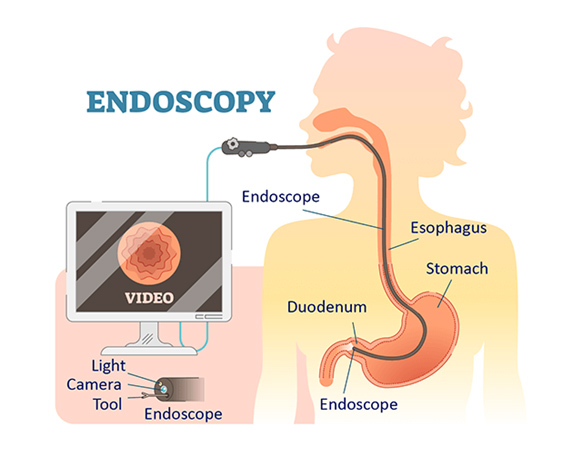
Endoscopy is a non-surgical, minimally invasive diagnostic procedure in which a thin, flexible tube fitted with a light and camera, called an endoscope, is passed into the body to examine internal organs and structures.
Unlike X-rays or CT scans, endoscopy provides a direct, real-time, high-definition view of your digestive tract. It can both diagnose conditions and, in many cases, treat them during the same procedure.
What Is Endoscopy?
Endoscopy allows direct visual examination of the digestive tract using a camera-equipped flexible scope. It is used to identify inflammation, ulcers, bleeding, growths, strictures, infections, and early cancer changes with much greater precision than indirect imaging alone.
Because the endoscope gives a real-time view, biopsies can be taken immediately and certain treatments can also be performed during the same session when needed.
Types of Endoscopy Performed by Dr. Srihari Shapur
Upper GI Endoscopy (OGD Scopy / Gastroscopy)
The endoscope is passed through the mouth to examine:
- Oesophagus (food pipe).
- Stomach.
- Duodenum (first part of the small intestine).
It is used to diagnose GERD, peptic ulcers, gastritis, oesophageal varices, H. pylori infection, Barrett's oesophagus, and upper GI bleeding.
Colonoscopy
The endoscope is passed through the rectum to examine:
- The entire large intestine (colon).
- The terminal ileum (end of the small intestine).
It is used to diagnose colon polyps, colorectal cancer, ulcerative colitis, Crohn's disease, lower GI bleeding, and diverticulosis.
Sigmoidoscopy
A shorter version of colonoscopy examining only the lower part of the colon. Faster preparation, often used as a screening tool.
Symptoms That Indicate You Need an Endoscopy
Do not wait for symptoms to worsen. Consult Dr. Shapur if you experience:
- Persistent acidity, heartburn, or GERD that doesn't respond to medication.
- Difficulty or pain while swallowing (dysphagia).
- Unexplained weight loss.
- Recurring nausea or vomiting.
- Abdominal pain that is persistent or worsening.
- Blood in vomit (haematemesis).
- Dark, tarry stools (melaena) indicating upper GI bleeding.
- Fresh blood in stools, possibly lower GI bleeding.
- Change in bowel habits lasting more than 2 weeks.
- Family history of colorectal cancer, with screening colonoscopy recommended from age 40 to 45.
Causes and Risk Factors for GI Conditions Diagnosed by Endoscopy
- Helicobacter pylori (H. pylori) bacterial infection.
- Long-term NSAID pain medication use.
- Alcohol and tobacco use.
- Chronic acid reflux untreated for years.
- Obesity and unhealthy diet.
- Family history of GI cancers or polyps.
- Inflammatory bowel disease (IBD).
- Sedentary lifestyle and low-fibre diet.
Diagnosis - What Happens During Endoscopy?
Before the Procedure
- You will be asked to fast for 6 to 8 hours before upper GI endoscopy.
- For colonoscopy, bowel preparation with a laxative solution is needed the night before.
- Dr. Shapur's team provides complete written preparation instructions.
During the Procedure
- A mild sedative or throat spray is administered for comfort.
- The procedure usually takes 15 to 30 minutes.
- The endoscope transmits live images to a screen for real-time evaluation.
- Biopsies can be taken if abnormalities are seen.
After the Procedure
- You will rest for 30 to 60 minutes in recovery.
- Most patients can return home the same day.
- Results and findings are discussed personally by Dr. Shapur.
Therapeutic Endoscopy - Treatment During the Same Procedure
In many cases, endoscopy is not only diagnostic but also therapeutic. Conditions can often be treated immediately without the need for open surgery.
- Polypectomy for removal of colon or stomach polyps.
- Band ligation for treatment of oesophageal varices.
- Argon plasma coagulation (APC) to stop GI bleeding.
- Dilation to widen narrowed oesophageal segments.
- Biopsy for tissue sampling and lab analysis.
This means that for many patients, one procedure solves both the diagnostic and therapeutic challenge without surgery.
Recovery and What to Expect After Endoscopy
Recovery from endoscopy is usually simple:
Upper GI Endoscopy
The throat may feel slightly sore for a day, and normal diet usually resumes the same evening.
Colonoscopy
Mild bloating may last a few hours, and a light diet for 24 hours is often recommended.
Driving Restriction
Avoid driving for the rest of the day if sedation was used.
Return to Work
Most patients can return to work the next day.
Why Choose Dr. Srihari Shapur for Endoscopy in Gottigere?
Experienced Procedural Expertise
Experienced laparoscopic surgeon and gastroenterology proceduralist.
High-Definition Equipment
Modern endoscopy equipment at Medax Hospitals, Gottigere.
Clear Preparation Guidance
Comprehensive pre-procedure counselling and clear instructions before the test.
Patient-Friendly Environment
Compassionate, calm, and patient-focused care throughout the experience.
Same-Day Review
Results discussion and personalised treatment planning are usually done the same day.
Convenient South Bangalore Access
Located near Bannerghatta Road and accessible from Vijaya Bank Layout, Koramangala, Meenakshi Mall area, and IIM Bangalore area.
Frequently Asked Questions
Q1. Is endoscopy painful?
Upper GI endoscopy is generally not painful. A throat spray or mild sedative is used. You may feel mild discomfort. Colonoscopy with sedation is also well-tolerated by most patients.
Q2. How long does an endoscopy take?
Upper GI endoscopy takes 15 to 20 minutes. Colonoscopy takes 20 to 45 minutes depending on findings.
Q3. Do I need to fast before endoscopy?
Yes. For upper GI endoscopy, fasting for 6 to 8 hours is required. For colonoscopy, bowel preparation with a clear liquid diet and laxatives the day before is needed.
Q4. Can endoscopy detect cancer?
Yes. Endoscopy can detect early-stage oesophageal, gastric, and colorectal cancers. Biopsies taken during the procedure confirm the diagnosis.
Q5. How often should I get a colonoscopy?
Adults with an average risk should consider screening colonoscopy from age 40 to 45. Those with a family history may need it earlier. Dr. Shapur will advise based on your individual risk profile.
Q6. Is sedation mandatory for endoscopy?
Sedation is optional for upper GI endoscopy, and many patients tolerate it well with a throat spray alone. For colonoscopy, mild IV sedation is usually recommended for comfort.
Q7. What should I avoid eating before an upper GI endoscopy?
Nothing by mouth for 6 to 8 hours before the procedure. Clear liquids such as water or black tea may be allowed up to 4 hours before in some protocols. Dr. Shapur's team will give specific instructions.
Q8. Where is Dr. Srihari Shapur's endoscopy centre in Gottigere?
At Medax Hospitals, Kalena Agrahara, Bannerghatta Road, Gottigere, Bangalore - 560 076. Easily reachable from Hulimavu, Arekere, JP Nagar, HSR Layout, and Electronic City.

