Day-Care Lipoma Surgery
Lipoma Removal in Gottigere, Bangalore - Safe, Scar-Minimal Surgery by Dr. Srihari Shapur
Lipomas are common benign fatty lumps that usually grow slowly over time and often cause no serious health problem. Even so, they can become uncomfortable, cosmetically bothersome, or occasionally difficult to distinguish from other soft tissue lumps.
Dr. Srihari Shapur offers safe lipoma excision in Gottigere with minimal scarring, same-day discharge, and careful evaluation of both superficial and deep lipomas.
What Is a Lipoma?
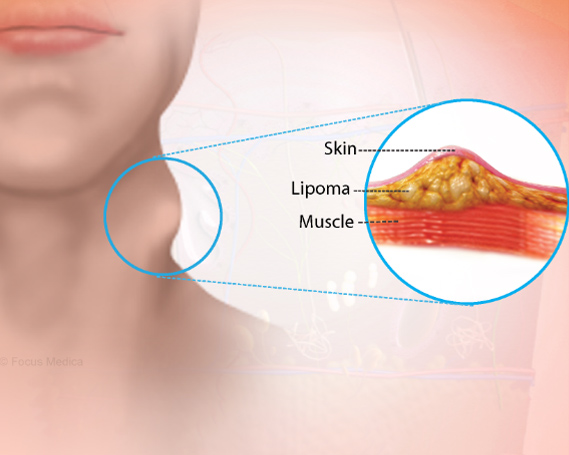
A lipoma is a benign or non-cancerous overgrowth of fat cells that forms a soft, well-defined lump between the skin and the underlying muscle layer. Lipomas grow very slowly, often over many years, and are almost never malignant.
Most people develop only one lipoma in their lifetime, though some individuals develop multiple lipomas, a condition called lipomatosis. They can appear almost anywhere on the body where fat cells exist.
Types of Lipomas
Superficial Subcutaneous Lipoma
The most common type, just below the skin surface. It feels soft, rubbery, and movable and is often found on the neck, shoulders, back, arms, and thighs.
Deep Lipoma
Lies below the fascia covering muscles. It is less common and may need a more complex excision, sometimes causing pain or functional limitation.
Angiolipoma
Contains blood vessels in addition to fat cells and is often painful, unlike a typical lipoma. It usually needs surgical excision.
Intramuscular Lipoma
Grows within muscle tissue. Rare, but it can restrict movement and usually needs more extensive removal.
Multiple Lipomas (Lipomatosis)
Some patients develop several lipomas due to hereditary or metabolic conditions. Each lump is benign and removal is planned selectively.
Symptoms of Lipoma
Most lipomas cause no symptoms whatsoever. They may be noticed as:
- A soft, doughy, rubbery lump under the skin.
- Well-defined and clearly separated from surrounding tissue.
- Freely movable when pressed.
- Usually painless, although angiolipomas and lipomas over nerves may hurt.
- Slowly growing and sometimes unchanged for years before gradual enlargement.
When Should You Have a Lipoma Removed?
While most lipomas are harmless, removal is recommended when:
- The lipoma is growing and any rapid increase in size needs evaluation.
- It is causing pain or discomfort, especially near joints or nerves.
- It is in a functionally awkward location such as the elbow, knee, neck, or groin.
- You are bothered cosmetically by a visible lump on the face, neck, or forearms.
- It has become large, especially over 5 cm, and needs excision to rule out liposarcoma.
- There is uncertainty about diagnosis, especially if the lump is hard, fixed, or rapidly growing.
Causes of Lipoma
The exact cause of lipomas is not fully understood, but contributing factors include:
- Genetics, since lipomas often run in families and familial multiple lipomatosis is hereditary.
- Age, most commonly between 40 and 60 years, though they can occur at any age.
- Minor trauma, with some lipomas appearing after local injury.
- Metabolic conditions such as Madelung's disease involving multiple lipomas in the neck and shoulders.
- Adiposis dolorosa or Dercum's disease, which causes painful lipomas.
Risk Factors
- Family history of lipomas.
- Age 40 to 60 years.
- Hereditary conditions such as Familial Multiple Lipomatosis and Gardner's syndrome.
- Obesity, although lipomas also occur in people of all body weights.
Diagnosis
Dr. Srihari Shapur diagnoses lipomas clinically in most cases because the characteristic feel is distinctive. In some situations, additional tests are ordered:
- Ultrasound to confirm a lipoma, measure size, and rule out a cyst or other lesion.
- MRI for deep, large, or unusual lipomas and to rule out liposarcoma before surgery.
- Core biopsy if malignancy is a concern in a rapidly growing, firm, or large lump.
Treatment - Lipoma Excision
Surgical Excision (Standard Method)
The definitive treatment for lipoma is complete surgical excision.
- Performed under local anaesthesia for most superficial lipomas or general anaesthesia for large, deep, or multiple lipomas.
- A small incision is made over the lipoma and the lump is carefully dissected free and removed whole.
- The incision is closed with fine, absorbable sutures for minimal visible scarring.
- All specimens are sent for histopathological examination.
- Day-care procedure with same-day discharge.
- Usually takes 20 to 45 minutes depending on size and location.
Why complete removal matters: incomplete excision significantly increases the risk of recurrence. Dr. Srihari Shapur's meticulous surgical technique focuses on complete removal every time.
Minimal Excision Technique (for suitable lipomas)
For small, superficial lipomas, a tiny 3 to 5 mm incision can be used with a curved forceps or cannula to extract the lipoma with virtually no scar. This is not suitable for all lipomas, and Dr. Shapur will determine candidacy.
Recovery Process
- Day 1: the wound is dressed and mild soreness at the excision site is managed with analgesics.
- Day 3 to 5: most patients return to desk work and light activity.
- Week 1 to 2: suture removal if non-absorbable sutures were used, with swelling and bruising settling.
- Week 3 to 4: complete healing and review of histopathology at follow-up.
- Avoid strenuous activity, swimming, or heavy lifting for 2 weeks.
Prevention Tips
Lipomas cannot be reliably prevented because genetics play a significant role. However:
- Maintain a healthy body weight and active lifestyle.
- Report any new or growing lump promptly instead of waiting until it becomes large.
- Patients with a family history of lipomas should inform their surgeon because multiple lesions may develop over time.
Why Choose Dr. Srihari Shapur for Lipoma Removal in Gottigere?
Expert in All Lipoma Types
Experienced in superficial, deep, painful, and multiple lipoma excision.
Minimal Excision Option
Suitable small lipomas may be removed with a very small incision and near-invisible scar.
Cosmetically Sensitive Approach
Scars are planned strategically and kept as minimal as possible.
Complete Histopathology Work-Up
Every specimen is sent for confirmation and safety.
Day-Care Surgery
Most procedures are completed at Medax Hospitals, Gottigere without a long hospital stay.
Accessible Gottigere Location
Convenient for patients from Hulimavu, Arekere, JP Nagar, BTM Layout, HSR Layout, Bilekahalli, Koramangala, and near IIM Bangalore.
Frequently Asked Questions
Q1. Is a lipoma dangerous?
Lipomas are almost always benign. However, any rapidly growing, firm, or large lump should be evaluated to rule out a rare malignant variant called liposarcoma.
Q2. Does a lipoma need to be removed?
Not always. Small, asymptomatic lipomas can be monitored. Removal is recommended if the lipoma is growing, painful, cosmetically bothersome, or functionally limiting.
Q3. Is lipoma removal surgery painful?
The procedure is performed under local anaesthesia, so you will feel only a brief sting from the anaesthetic injection. The excision itself is painless, and post-operative soreness is usually mild.
Q4. Will the lipoma come back after removal?
Complete excision results in a low recurrence rate, usually less than 2 percent. Incomplete removal can lead to regrowth.
Q5. How big can a lipoma get?
Most lipomas are 1 to 5 cm at presentation. Lipomas over 5 cm are called giant lipomas and are more likely to need MRI evaluation and excision.
Q6. Can lipomas be removed without surgery?
There is no reliable non-surgical method that permanently removes a lipoma. Surgical excision remains the gold standard.
Q7. How long does lipoma removal surgery take?
Most lipoma excisions take 20 to 45 minutes under local anaesthesia, and patients usually go home within 1 to 2 hours of the procedure.
Q8. Are there multiple lipomas? Can all of them be removed?
Yes. Multiple lipomas can be removed in stages or at the same sitting depending on size, location, and patient preference. Dr. Shapur will create a personalized plan.
Q9. Can children get lipomas?
Lipomas are more common in adults aged 40 to 60 years, but they can occasionally occur in children or adolescents and are evaluated similarly.
Q10. How do I know if my lump is a lipoma and not cancer?
A clinical examination and ultrasound are usually enough to confirm a benign lipoma. If the lump has atypical features, MRI or biopsy is performed. Proper evaluation is important.

