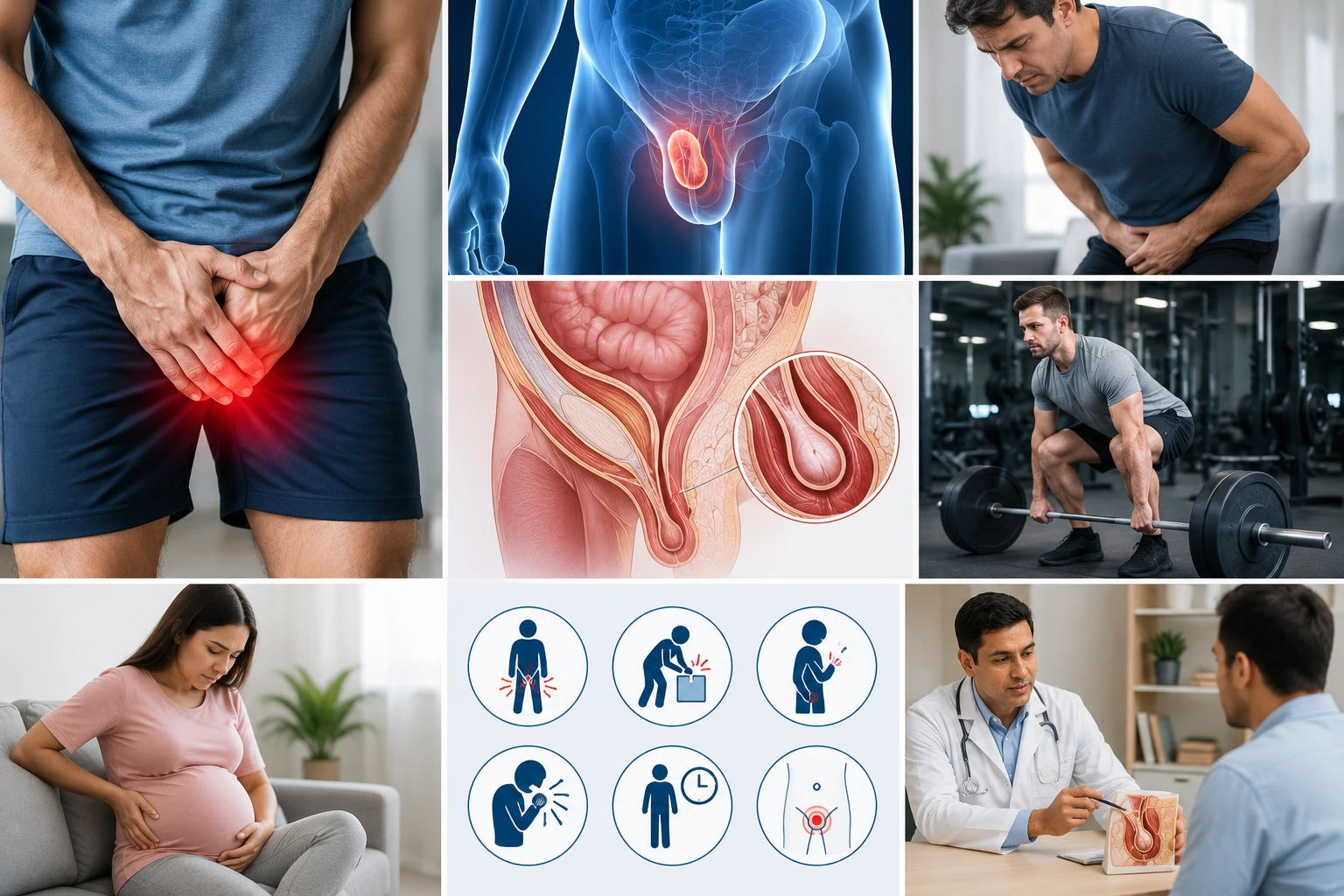
Early Signs of an Inguinal Hernia: Symptoms You Should Never Ignore
Most people think a hernia appears suddenly as a noticeable lump. In reality, it often begins with subtle warning signs that are easy to ignore. A mild ache after standing for long hours, a pulling sensation while lifting groceries, or discomfort during exercise may all be early indicators of a developing hernia.
Recognizing these symptoms early can lead to timely diagnosis, simpler treatment, and a lower risk of complications. In this article, we'll explain the early signs of an inguinal hernia, common causes, how to distinguish it from a muscle strain, and when it's time to consult a specialist.
What Is an Inguinal Hernia?
An inguinal hernia happens when a part of the intestine or fatty tissue pushes through a weak spot in the abdominal wall, usually near the inguinal canal in the groin area. This is the most common type of hernia, affecting both men and women, though it's more frequent in men due to the natural structure of the inguinal canal.
You can think of the abdominal wall as a strong protective layer that keeps the internal organs in place. When a naturally weak area or weakened muscle gives way under pressure, a portion of fat or intestine may protrude through it, resulting in an inguinal hernia.
Why Can Pregnancy and Heavy Lifting Cause a Hernia?
Hernias usually develop when increased pressure inside the
abdomen acts on a naturally weak or weakened area of the
abdominal wall. They're almost always the result of increased
pressure inside the abdomen combined with some degree of
- Pregnancy, which stretches and weakens abdominal muscles over months
- Heavy lifting, especially with poor form or breath-holding
- Chronic cough, which repeatedly strains the abdominal wall
- Constipation and straining, which increases internal pressure
- Obesity, which places continuous extra load on weak areas
None of these factors guarantee a hernia will develop, but they raise the risk, particularly if there's already a natural weak point in the abdominal wall.
Early Signs of Hernia Most People Ignore
One of the biggest challenges with hernias is that the earliest symptoms are often mistaken for muscle strain or simple fatigue. Common warning signs include:
- A dull, nagging ache in the groin, especially by evening
- A burning sensation in groin or lower abdomen
- A feeling of heaviness or pressure in the groin area
- Discomfort that worsens after standing for long periods
- Pain that shows up specifically after lifting something heavy
- Pain or a pulling feeling while coughing or sneezing
- Intermittent swelling that comes and goes, especially with activity
- A vague sense that "something doesn't feel right" in the lower abdomen, even without a visible lump
If several of these sound familiar, it's worth getting checked rather than waiting for a lump to confirm it.
Groin Pain: Hernia or Muscle Pull?
Because both conditions cause groin discomfort, distinguishing between a hernia and a muscle strain can be difficult without a medical examination. This is one of the most common questions patients ask, because groin pain hernia or muscle pull can genuinely feel similar in the early stages. Here's a simple way to tell them apart:
| Factor | Muscle Pull | Hernia |
|---|---|---|
| Pain pattern | Sharp at first, gradually eases with rest | Dull ache that persists or slowly worsens |
| Swelling | Rare, usually mild if present | Common, especially with activity |
| Gets worse while lifting | Yes, but improves with rest | Yes, and often returns with any strain |
| Bulge | Usually absent | May appear intermittently, especially standing |
| Healing time | Days to 2 weeks with rest | Doesn't resolve with rest alone |
| Need for surgery | Rarely | Often, especially if symptomatic |
Hernia After Pregnancy
Many women are surprised to learn that hernia after pregnancy is fairly common, yet it's often dismissed as normal postpartum discomfort. During pregnancy, the abdominal wall stretches significantly to accommodate the growing baby, and this can weaken the tissue around the groin and lower abdomen. Women who have had multiple pregnancies or difficult deliveries may have a slightly higher risk due to repeated stretching of the abdominal wall.
Add in the physical demands of new motherhood — repeatedly lifting a baby, carrying a car seat, bending frequently — and that weakened area is under constant strain. Hormonal changes during pregnancy also affect connective tissue elasticity, which can play a role too. Because postpartum fatigue and abdominal soreness are so common anyway, hernias in new mothers are sometimes diagnosed later than they should be. If discomfort persists well beyond the usual postpartum recovery window, it deserves a proper evaluation.
Hernia After Gym and Heavy Weightlifting
Weight training is excellent for overall health, but improper lifting techniques can significantly increase the risk of developing an inguinal hernia. Hernia after gym Bangalore is a search we see often, and for good reason — heavy lifting is one of the most common triggers for inguinal hernias in otherwise fit, healthy adults.
Certain movements carry higher risk when done with poor technique:
- Deadlifts, particularly with excessive spinal or abdominal strain
- Squats, especially heavy loads with improper bracing
- Core exercises performed with breath-holding instead of controlled breathing
- Overtraining without adequate recovery, which weakens tissue resilience over time
Improper breathing technique is an underrated factor here. Holding your breath while straining under heavy load (a habit called the Valsalva maneuver, used incorrectly) spikes intra-abdominal pressure dramatically, and that pressure has to go somewhere. Learning proper bracing and breathing technique isn't just about performance — it genuinely protects your abdominal wall.
When Should You See a Hernia Surgeon?
- Persistent or worsening pain that doesn't settle with rest
- A lump that's growing in size
- Nausea or vomiting along with groin pain
- Sudden, severe pain in the groin or abdomen
- Redness or discoloration over the swelling
- A hernia that suddenly becomes hard, painful, and can't be pushed back in
That last combination can indicate a strangulated hernia, where the blood supply to the trapped tissue is cut off. This is a genuine emergency and needs immediate medical attention.
How Is an Inguinal Hernia Diagnosed?
An inguinal hernia is often diagnosed through a detailed medical history and physical examination. During the examination, your surgeon may ask you to stand or cough to make the hernia more noticeable. In many cases, this is enough for a confidenthernia diagnosis.
When the picture isn't clear, imaging helps:
- Ultrasound is often the first choice, especially for early or uncertain cases
- CT scan may be used for a more detailed view, particularly in complex or recurrent hernias
- MRI is occasionally used, especially when a sports hernia or another soft tissue issue needs to be ruled out
Treatment Options
- Watchful waiting may suit small, symptom-free hernias in select patients, with regular monitoring
- Open repair involves a single incision to push the tissue back and reinforce the wall
- Laparoscopic hernia surgery uses small incisions and a camera, generally meaning less pain and a faster return to normal activity
- Mesh repair is commonly used in both open and laparoscopic approaches to reinforce the weakened area and reduce recurrence risk
Early Signs of a Hernia: When to Consult a Hernia Specialist in Bangalore
With increasing participation in fitness activities, physically demanding occupations, and busy urban lifestyles, inguinal hernias are commonly seen across Bangalore. Regardless of where you live, early diagnosis remains the key to preventing complications and achieving faster recovery.
Delaying evaluation doesn't make a hernia go away — it usually gives it more time to enlarge or become symptomatic. If you're noticing any of the early signs discussed above, getting evaluated sooner rather than later is almost always the better call.
Conclusion
An inguinal hernia rarely begins with an obvious lump. More often, it starts with subtle symptoms such as groin discomfort, heaviness, or a pulling sensation that gradually becomes more noticeable over time.
Recognizing these early warning signs allows for prompt evaluation and treatment before complications develop.
If you're experiencing persistent groin pain, discomfort while lifting, or intermittent swelling, don't ignore these symptoms. A timely consultation with a qualified hernia specialist can provide an accurate diagnosis and help determine the most suitable treatment plan.
Dr. Srihari Shapur, General, GI, Laparoscopic & Hernia Surgeon in Bangalore, offers comprehensive evaluation and advanced treatment options for patients with inguinal and other abdominal wall hernias.
