Endoscopy vs Colonoscopy: What's the Difference?
If your doctor has mentioned an endoscopy or a colonoscopy, it is natural to wonder how the two differ and which one might apply to you. Both use a thin, flexible tube with a light and camera to look at the lining of the digestive tract, but they examine different areas, need different preparation and are recommended for different reasons.
This guide explains those differences in plain language so you can ask better questions at your appointment. It is general information, not a substitute for an individual assessment. If you are searching for an Endoscopy Specialist in Bangalore, understanding the basics first can help you make sense of what a clinician advises before you agree to any procedure.
What Is the Difference Between Endoscopy and Colonoscopy?
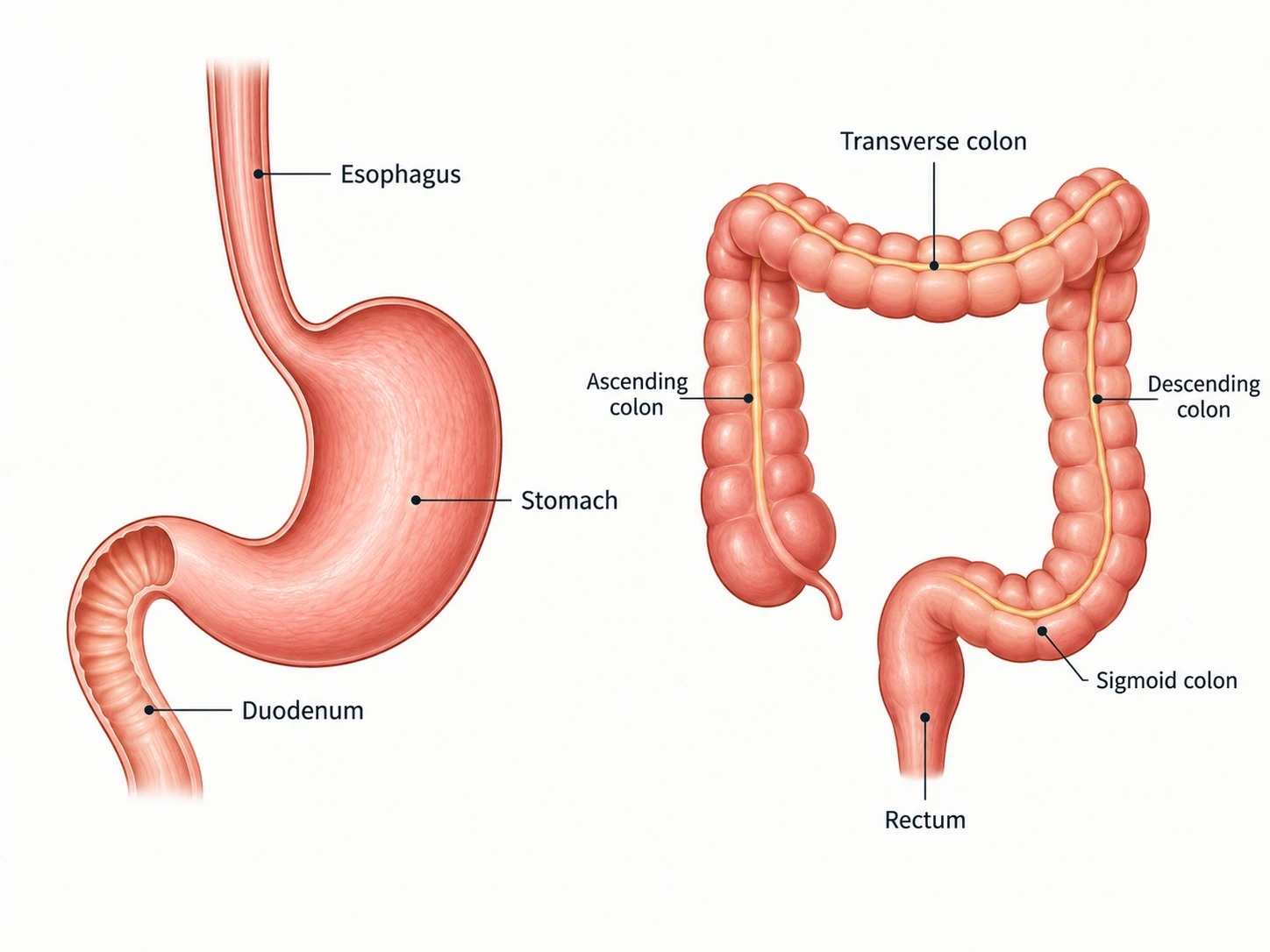
An upper GI endoscopy examines the upper digestive tract (the oesophagus, stomach and duodenum) through the mouth. A colonoscopy examines the rectum and colon through the anus. Both are forms of gastrointestinal endoscopy, but they look at different organs, are done for different symptoms and need different preparation.
They are not interchangeable. One cannot show what the other is designed to see, and many people need neither. The choice depends on your symptoms, examination findings, age, risk factors and medical history.
| Feature | Upper GI Endoscopy | Colonoscopy |
|---|---|---|
| Main area examined | Oesophagus, stomach and duodenum | Rectum and colon |
| Scope insertion | Through the mouth | Through the anus |
| Common preparation | Fasting for the instructed period | Bowel cleansing and dietary instructions |
| Common reasons | Selected upper digestive symptoms and conditions | Selected bowel symptoms, bleeding, screening or surveillance |
| Sedation | May be offered depending on circumstances | May be offered depending on circumstances |
| Recovery | Depends on sedation, findings and intervention | Depends on sedation, findings and intervention |
Exact protocols vary by facility, clinical indication, medical history and any planned intervention.
What Is an Upper GI Endoscopy?
An upper GI endoscopy, also called gastroscopy or diagnostic endoscopy, lets a clinician see the lining of the oesophagus, stomach and first part of the small intestine directly.
It may be considered for selected upper digestive symptoms, such as persistent upper abdominal discomfort, difficulty swallowing or suspected bleeding.
Not every episode of acidity, indigestion or abdominal pain needs an endoscopy. Many are assessed and managed without one. When a scope is advised, a small tissue sample (an endoscopy biopsy) can be taken for laboratory examination, and some treatments may be possible during the same procedure when clinically indicated.
What Is a Colonoscopy?
A colonoscopy uses a longer flexible scope to examine the rectum and colon. It may be recommended to investigate bowel symptoms such as unexplained bleeding or a persistent change in bowel habits, to assess suspected inflammatory bowel disease, or for colorectal cancer screening and surveillance.
These purposes differ. A diagnostic colonoscopy investigates symptoms. Screening is offered to people without symptoms, and surveillance follows up people with a previous polyp or other risk.
Timing depends on age, family history and current clinical guidance, so your doctor should advise you individually. A colonoscopy biopsy can be taken when needed, and some polyps can be removed during the procedure when appropriate. Constipation, loose stools or abdominal discomfort do not automatically call for a colonoscopy.
Endoscopy Preparation: What Should You Know?
Endoscopy preparation mainly centres on an empty stomach so the view is clear and the procedure is safer. Your healthcare team will tell you how long to fast and what, if anything, you may drink.
Fasting before endoscopy is not the same everywhere; it depends on the procedure, the sedation plan, your health and the facility's protocol, so follow the instructions you are given rather than a general figure.
Before the procedure, tell the team about your medicines, allergies, pregnancy where relevant and existing conditions. Blood thinners and diabetes medicines often need an individual plan. Do not stop any prescribed medicine unless the treating clinician tells you to. If sedation is planned, arrange for an adult to accompany you.
Colonoscopy Preparation: How Is It Different?
Colonoscopy preparation is usually more involved because the colon must be clean enough to examine properly. Bowel preparation before colonoscopy typically includes dietary restrictions for a set period, clear-fluid instructions and a prescribed bowel-cleansing solution, sometimes taken as a split dose over two occasions.
The product, amount and timing must come from your clinician; they are not the same for everyone. People with diabetes, kidney disease or heart conditions often need tailored advice, and medicines should be reviewed in advance.
If the bowel is not adequately cleared, small abnormalities can be missed and the examination may need to be repeated, so follow the written schedule closely and plan transport if sedation will be used.
Is Endoscopy Painful? What Do Patients Usually Experience?
Experiences vary. During an upper GI endoscopy, some people notice gagging, throat discomfort, bloating or pressure. Throat-numbing spray or sedation may be used, depending on the procedure and your circumstances, and the discomfort is usually temporary.
The question "is endoscopy painful?" has no single answer, and no clinician can promise a completely painless experience.
A colonoscopy can cause abdominal pressure, bloating or cramping, because air or gas is introduced to open the bowel. Sedation options differ between facilities and patients.
After sedation, you may feel drowsy. Follow the aftercare instructions, avoid driving and avoid important decisions for the period you are advised. Recovery time depends on sedation, findings and any intervention, and cannot be guaranteed.
Why Might a Doctor Recommend One Procedure Instead of the Other?
Doctors begin with your story and examination. Symptoms that point to the oesophagus, stomach or duodenum may lead to a discussion about upper GI endoscopy.
Bowel-related symptoms, unexplained rectal bleeding, certain blood-test findings, a family history of colorectal disease or a screening indication may lead to a discussion about colonoscopy.
Sometimes other tests, a trial of treatment or watchful monitoring come first. Our overview of early cancer warning signs and screening explains how symptom investigation differs from screening.
Because the decision rests on individual factors, avoid self-diagnosing from search results. The treating clinician determines which investigation, if any, is appropriate, and should explain the alternatives.
What Are the Risks and Limitations of Endoscopy and Colonoscopy?
Both are commonly performed, but neither is risk-free. Possible considerations include reactions to sedation, bleeding (more likely after a biopsy or polyp removal) and, rarely, a tear in the bowel or digestive tract wall (perforation).
The likelihood depends on the procedure, your health and whether an intervention is performed. Your clinician should explain the risks relevant to you before you consent.
There are also limitations. Preparation may be inadequate, a complete examination is not always possible, and a normal result does not rule out every digestive condition. Some findings need further tests or a repeat procedure.
What Factors Can Affect the Cost of Endoscopy or Colonoscopy?
Prices vary widely, so this article does not quote any. Common components include:
- The type of procedure and whether it is diagnostic or therapeutic
- Biopsy or polyp removal, and laboratory pathology charges
- Sedation or anaesthesia arrangements
- Facility, procedure-room and recovery charges
- Doctor and clinical team fees, plus consumables
- Pre-procedure consultation and investigations
- Insurance terms and eligibility
An advertised price may not include all of these. Ask for a written estimate and confirm what is included and excluded.
How to Prepare for an Endoscopy or Colonoscopy Appointment
- Confirm why the investigation is advised and which procedure is planned.
- Follow the exact fasting or bowel-preparation instructions you receive.
- Share all medicines, allergies and medical conditions, and ask which medicines need adjusting.
- Confirm sedation arrangements and transport.
- Ask whether biopsy, pathology or other interventions could add charges.
- Ask when and how results will be discussed.
- Know whom to contact if symptoms worsen before the appointment.
When Should You Seek Medical Attention?
Some symptoms need prompt assessment rather than a routine booking: vomiting blood, substantial rectal bleeding, black tarry stools with weakness or dizziness, severe or worsening abdominal pain, or collapse.
Go to the nearest emergency department; do not delay care while comparing providers.
After a procedure, seek urgent help for significant bleeding, severe or worsening abdominal pain, fever, difficulty breathing or fainting.
Consulting an Endoscopy Specialist in Bangalore
A consultation can clarify why an investigation is suggested, whether upper GI endoscopy or colonoscopy may suit you, what preparation involves, the risks and the likely charges.
Dr. Srihari R. Shapur is a general and laparoscopic surgeon whose listed qualifications include an MS in General Surgery, FIAGES and a Fellowship in Endoscopy.
The clinic's endoscopy page describes upper GI endoscopy and colonoscopy services at Medax Hospitals, Gottigere.
He also consults at ARC Cancer Hospital, Wilson Garden, where a separate page covers endoscopy consultation in Wilson Garden . Please confirm current procedure availability and appointment details directly with the clinic.
If you would like to ask about assessment or procedure arrangements, you are welcome to review the consultation information or contact the clinic .
Conclusion
Upper GI endoscopy and colonoscopy examine different parts of the digestive tract, with different preparation and indications. Neither is right for everyone, and neither is a guarantee of answers.
Follow your clinician's instructions, and discuss the purpose, benefits, limitations, risks and likely costs before proceeding. If you are in Bangalore and unsure which investigation applies to you, a calm conversation with a qualified doctor is a sensible first step.
