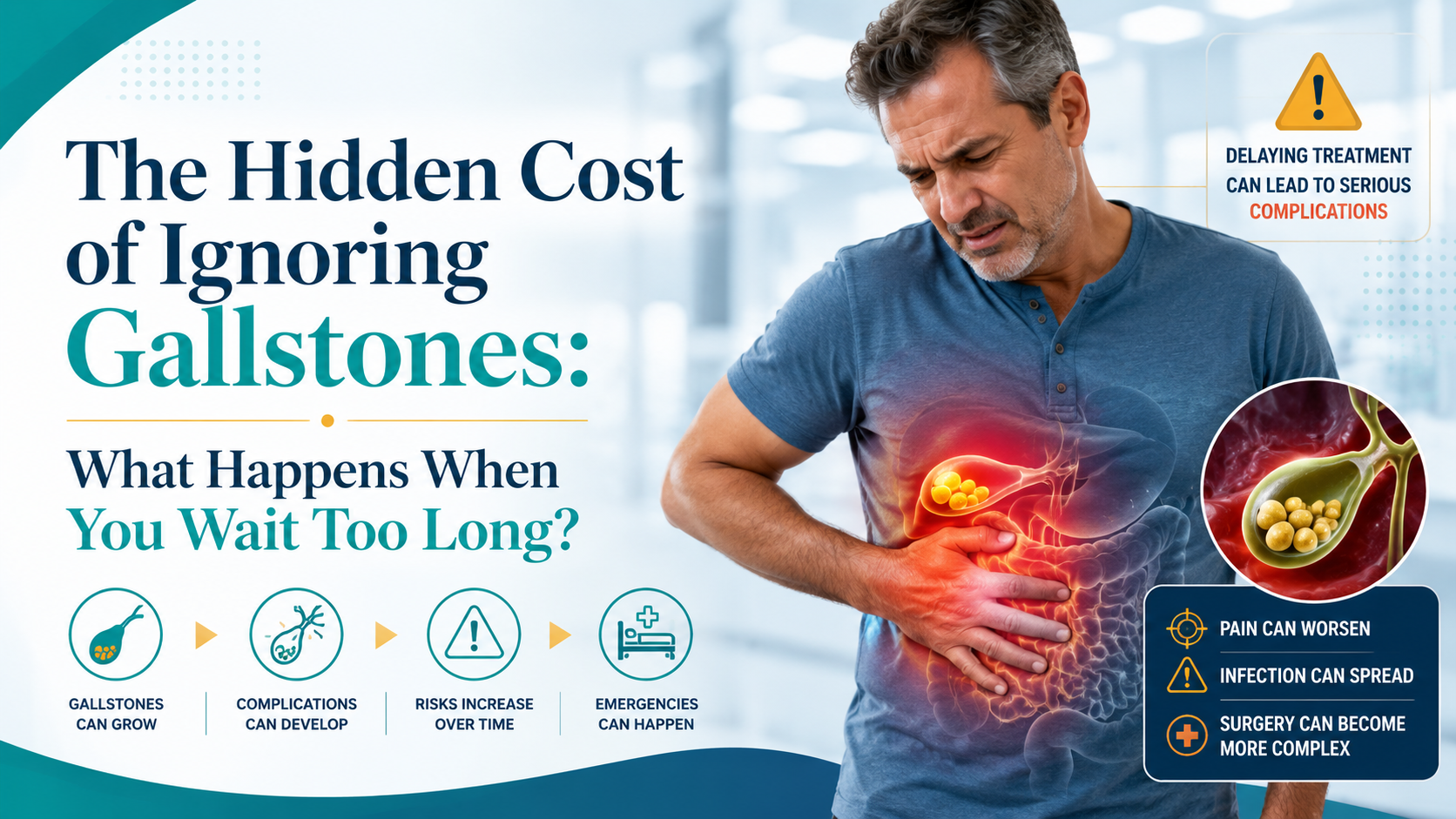
The Hidden Cost of Ignoring Gallstones: What Happens When You Wait Too Long?
Most people who have gallstones don't feel anything at all. That's exactly what makes them dangerous. A stone can sit quietly in the gallbladder for years, then suddenly trigger a medical emergency overnight. If you've been putting off Gallbladder Stone Surgery in Wilson Garden because the pain “isn't that bad yet,” Dr. Srihari Shapur explains what waiting can actually cost you — in health, money, and time.
What Are Gallstones?
Gallstones are small, hardened deposits that form inside the gallbladder, a small pouch under the liver that stores bile. Bile helps the body digest fat.
When bile contains too much cholesterol or bilirubin, it can crystallise into stones. These range from a grain of sand to the size of a golf ball, and a person can have one large stone or dozens of small ones.
Two main types exist:
- • Cholesterol stones – The most common type in India, formed from excess cholesterol in bile.
- • Pigment stones – Darker stones linked to conditions like liver disease or blood disorders.
Gallstones don't always cause trouble. Many people carry small, silent stones for years without ever knowing it, since they're only picked up when an ultrasound is done for something unrelated. Problems begin when a stone shifts position and blocks the narrow duct through which bile normally flows. That blockage is what turns a quiet gallstone into a painful one, and it's the reason doctors distinguish carefully between “silent” stones and “symptomatic” ones before recommending any treatment.
Why Many People Ignore Gallstones
Gallstones are often discovered by accident, during an ultrasound done for an unrelated reason. Even when symptoms appear, they are easy to dismiss.
Common reasons people delay care include:
- Mistaking gallbladder pain for gas, acidity, or a stomach infection.
- Feeling fine between episodes, so the problem seems “solved” on its own.
- Fear of surgery or anaesthesia.
- Believing home remedies or dietary changes alone will dissolve the stones.
- A busy schedule that keeps pushing the doctor's visit to “next month.”
This pattern of postponing care is precisely why so many patients only search for Gallbladder Stone Surgery near Wilson Garden once they're already in severe pain.
Early Warning Signs You Should Never Ignore
Your body usually gives warnings before a full-blown crisis. Watch for:
- Pain in the upper right or centre of the abdomen, especially after fatty meals.
- Pain that spreads to the right shoulder blade or back.
- Bloating, indigestion, or a feeling of fullness after small meals.
- Nausea or vomiting following meals.
- Recurring episodes that last from a few minutes to several hours.
If these symptoms show up more than once, it's time for an ultrasound and a consultation, not another round of antacids.
What Happens If Gallstones Are Left Untreated?
Ignoring symptomatic gallstones doesn't make them disappear. Over time, they can lead to serious complications:
- Severe, unpredictable pain that can strike without warning, often at night.
- Gallbladder infection, medically known as acute cholecystitis, caused by a stone blocking the gallbladder's outlet.
- Inflammation of the gallbladder wall, which can make the organ harder and riskier to remove later.
- Blocked bile duct, when a stone travels out of the gallbladder and lodges in the duct that carries bile to the intestine.
- Jaundice, or yellowing of the skin and eyes, when bile flow is blocked.
- Pancreatitis, a painful and potentially serious inflammation of the pancreas caused by bile duct blockage.
- Emergency surgery, performed under far less favourable conditions than a planned procedure.
- Gallbladder rupture, a rare but life-threatening complication of prolonged infection.
None of these complications appear overnight. They build gradually, silently, while the “it's not that bad” mindset takes hold.
The Hidden Costs of Delaying Treatment
The word “hidden” matters here. The costs of waiting aren't always obvious until you're already paying them.
- Emergency hospitalisation. A planned daycare procedure can turn into a multi-day admission.
- Increased surgical risk. Inflamed, infected, or scarred tissue is harder and riskier to operate on than a calm gallbladder.
- Higher medical expenses. Emergency surgery, ICU care, and extended hospital stays cost significantly more than a planned laparoscopic procedure.
- Longer recovery. Complicated surgeries often need larger incisions and longer healing time.
- Reduced quality of life. Repeated pain episodes disrupt sleep, appetite, and daily routines.
- Missed workdays. Unplanned hospital visits are harder to schedule around than a planned surgery date.
Choosing early evaluation and, where needed, Gallbladder Stone Surgery in Wilson Garden almost always costs less — in every sense — than waiting for a crisis.
There's also an emotional cost that's easy to overlook. Living with the uncertainty of when the next painful episode will strike can quietly wear down your confidence in planning travel, meals out, or even a normal workday. Patients often say that the relief of finally having the gallbladder removed outweighs any anxiety they had about the surgery itself.
When Should You Consider Surgery?
Not every gallstone needs immediate surgery. Silent stones found by chance, with no symptoms, are often simply monitored.
Surgery becomes the recommended path when:
- Gallstones cause repeated pain episodes.
- There's a history of gallbladder infection or inflammation.
- Stones have caused jaundice or pancreatitis in the past.
- Ultrasound shows a thickened, scarred, or poorly functioning gallbladder.
Laparoscopic cholecystectomy — keyhole removal of the gallbladder — is the preferred approach for most patients. It uses a few small incisions instead of one large cut, which means less pain, a shorter hospital stay, and a faster return to normal life compared with open surgery.
Benefits of Early Gallbladder Stone Surgery
Choosing surgery while the gallbladder is still healthy, rather than after a complication, offers real advantages:
- Lower risk of conversion to open surgery.
- Shorter operating time and hospital stay, often a single day.
- Faster return to work and daily activities.
- Reduced chance of infection or bleeding.
- Freedom from recurring pain episodes and the constant worry of “when will it happen again.”
Why Choosing an Experienced Surgeon Matters
Not all gallbladder surgeries are equal. Outcomes depend heavily on the surgeon's experience with laparoscopic technique, especially when a gallbladder is inflamed or scarred from repeated attacks.
Dr. Srihari Shapur, an experienced Gallbladder Stone Surgery Specialist in Wilson Garden, can assess your ultrasound findings, symptom history, and overall health to recommend the safest, least invasive option — and to convert to open surgery quickly and safely if that ever becomes necessary during the operation.
Look for a general and laparoscopic surgeon who:
- Has significant hands-on experience with laparoscopic cholecystectomy.
- Explains your specific case clearly, without rushing the conversation.
- Offers daycare or short-stay surgery for straightforward cases.
- Is easily reachable if questions or complications arise after discharge.
Patients in and around Wilson Garden don't need to travel across the city for quality surgical care. A local, experienced surgeon means shorter travel for pre-operative visits, easier follow-up appointments, and quicker access if any concerns come up during recovery.
Recovery After Gallbladder Stone Surgery
Recovery from a straightforward laparoscopic procedure is usually quick:
- Most patients walk within a few hours of surgery.
- Hospital stay is typically one day, sometimes less.
- Light activities can resume within 2–3 days.
- A return to desk-based work is common within a week.
- Small incisions mean less scarring and less post-operative pain than open surgery.
Your surgeon will guide you on diet, activity, and follow-up visits based on your specific recovery.
Recovery speed depends partly on how healthy the gallbladder was going into surgery. This is another reason planned, early treatment tends to go more smoothly than surgery performed after an infection or a rupture, when tissues are inflamed and healing naturally takes longer.
Tips to Prevent Gallstone Complications
While not every gallstone can be prevented, you can lower your risk of complications:
- Eat a balanced diet with moderate healthy fats rather than very low-fat or very high-fat extremes.
- Stay hydrated throughout the day.
- Maintain a steady weight — rapid weight loss can actually increase gallstone risk.
- Get an ultrasound promptly if you notice recurring upper abdominal pain.
- Don't ignore a second or third episode of pain, thinking it will pass on its own.
Conclusion
Gallstones rarely announce themselves loudly at first. A little discomfort here, a skipped meal there — and before long, what could have been a simple, planned procedure turns into an emergency. The real lesson is simple: don't wait for a crisis to take gallstones seriously.
If you're experiencing recurring abdominal pain, bloating, or discomfort after meals, an ultrasound and a timely conversation with Dr. Srihari Shapur about Gallbladder Stone Surgery in Wilson Garden can save you from unnecessary pain, expense, and risk down the road. Early evaluation is always easier than emergency care, and it puts you back in control of your own health decisions instead of leaving them to a middle-of-the-night hospital visit.
Book an Appointment