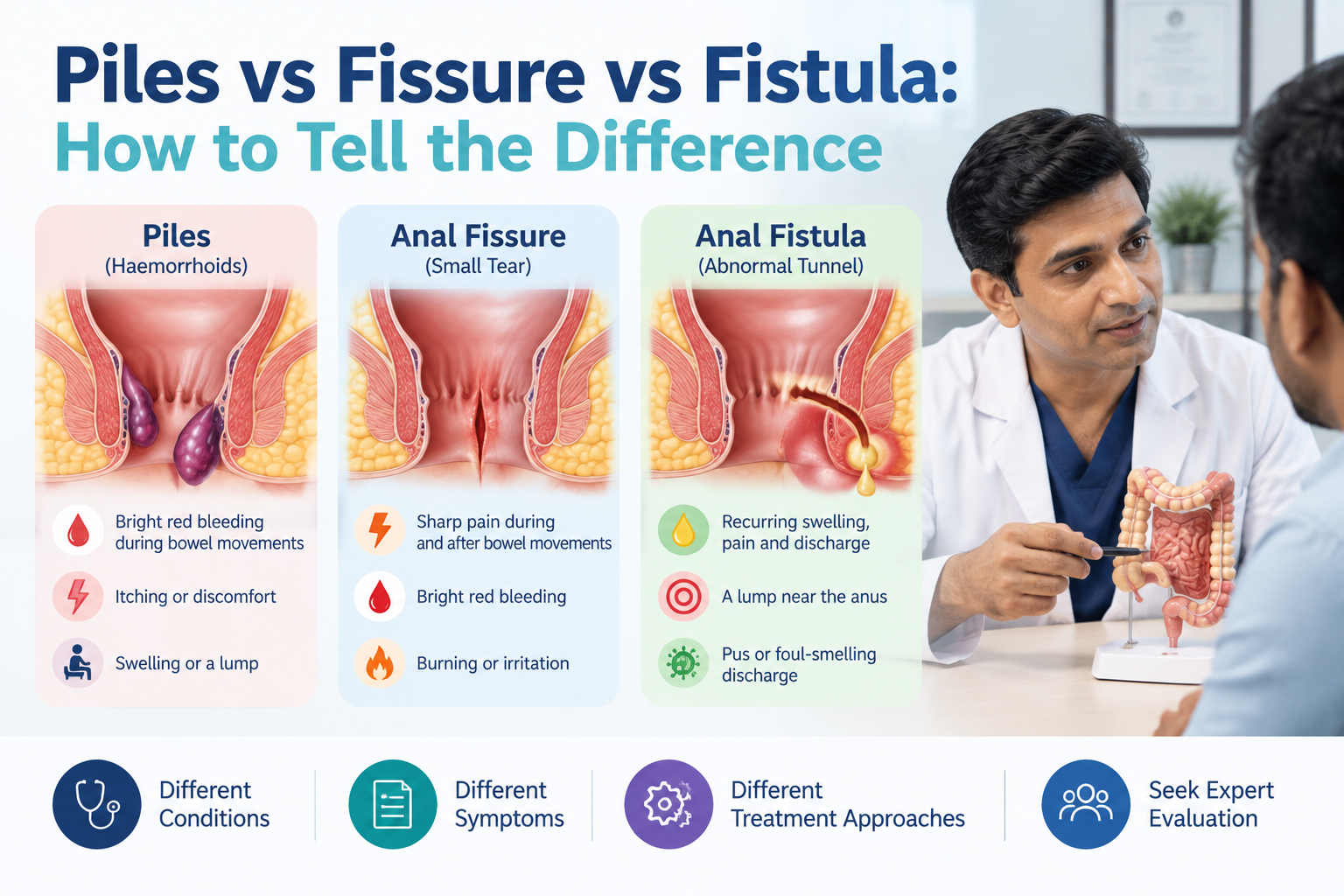
Piles vs Fissure vs Fistula: How to Tell the Difference
Pain, bleeding or discomfort during bowel movements can be worrying, especially when you are unsure whether the problem is piles, an anal fissure or a fistula. These three conditions affect the anal and rectal area, but they are different problems and may require different approaches to treatment.
Understanding the difference between piles and fissure, as well as fistula vs piles, can help you recognise when medical evaluation is necessary. However, symptoms can overlap, so trying to diagnose the condition based only on pain or bleeding is not always reliable.
Quick Answer: Piles vs Fissure vs Fistula
The simplest way to understand the three conditions is:
- Piles (haemorrhoids): Swollen blood vessels in or around the anus that may cause bleeding, itching, swelling or a lump.
- Anal fissure: A small tear in the lining of the anus, commonly associated with sharp pain during or after passing stool and sometimes bright-red bleeding.
- Anal fistula: An abnormal tunnel between the anal canal and the skin near the anus, often associated with recurring swelling, pain and discharge.
Because these conditions can produce similar symptoms, persistent pain and bleeding during motion should be evaluated rather than automatically assumed to be piles.
What Are Piles?
Piles, medically called haemorrhoids, are swollen or enlarged blood vessels in the anal or lower rectal region. They can occur internally or externally and may cause different symptoms depending on their location and severity.
Common symptoms may include:
- Bright-red bleeding during or after bowel movements
- Itching around the anus
- Swelling or a lump
- Discomfort while sitting
- Pain, particularly with some external haemorrhoids
- A feeling of incomplete bowel emptying in some cases
Constipation, prolonged straining during bowel movements and spending excessive time on the toilet can contribute to haemorrhoidal symptoms.
Not every case of rectal bleeding is caused by piles. Other anorectal or gastrointestinal conditions can also cause bleeding, which is why persistent or unexplained bleeding deserves medical assessment.
What Is an Anal Fissure?
An anal fissure is a small tear in the lining of the anus. It can develop after passing a hard or large stool, particularly when constipation causes significant stretching of the anal canal.
One of the most characteristic symptoms is sharp or cutting pain during bowel movements. The pain may continue for some time after passing stool.
Other symptoms can include:
- Bright-red blood on toilet paper or on the surface of the stool
- Pain during bowel movements
- Burning or irritation around the anus
- Spasm or tightness around the anal area
- Fear of passing stool because of anticipated pain
A fissure may sometimes improve with appropriate conservative treatment, particularly when the underlying constipation is addressed. However, persistent or recurrent fissures may require specialist evaluation and additional treatment.
What Is an Anal Fistula?
An anal fistula is different from piles and fissures. It is an abnormal tunnel connecting the inside of the anal canal to the skin around the anus.
An anal fistula commonly develops following an anal abscess or infection. After an abscess drains, an abnormal tract can remain and cause recurrent symptoms.
Possible symptoms include:
- Persistent or recurring pain near the anus
- Swelling or a lump
- Pus or foul-smelling discharge
- Repeated episodes of swelling that drain and then return
- Skin irritation around the anal opening
- Fever when an active infection or abscess is present
Unlike uncomplicated piles, an anal fistula generally requires assessment by a surgeon or proctology specialist because the tract may persist without appropriate treatment.
Symptom Comparison: Piles vs Fissure vs Fistula
| Symptom | Piles | Anal Fissure | Anal Fistula |
|---|---|---|---|
| Bleeding | Common, especially with internal piles | Can occur, often bright red | May occur but is not usually the main symptom |
| Pain during bowel movement | Variable | Often sharp or severe | May occur, particularly with infection |
| Lump/swelling | May occur | Usually not a prominent lump | Swelling may recur near the anus |
| Itching | Common | Possible | Possible due to discharge |
| Discharge | Not typical | Not typical | Common, especially if the tract is draining |
| Fever | Uncommon | Uncommon | May occur with abscess/infection |
| Recurring swelling | Possible with external piles | Not typical | Common feature |
| Underlying problem | Swollen haemorrhoidal tissue | Tear in anal lining | Abnormal tunnel/tract |
This table can help explain the difference between piles and fissure, but it should not be used as a substitute for a clinical examination.
Why Self-Diagnosis Can Be Unreliable
It is understandable to search online after noticing blood or pain during bowel movements. However, several anorectal conditions can produce similar symptoms.
For example, rectal bleeding may occur with piles or fissure, but bleeding can also have other causes. Similarly, a painful lump around the anus could represent an external haemorrhoid, abscess or another condition.
The location, duration, severity and pattern of symptoms matter. A doctor may also need to examine the area to distinguish between different conditions.
Therefore, searching for “piles vs fissure” or “fistula vs piles” can help you understand the possibilities, but it cannot establish a diagnosis.
Can Piles and Fissure Occur Together?
Yes. A person can have more than one anorectal condition at the same time.
For example, constipation and repeated straining may contribute to haemorrhoids while also causing an anal fissure. When both conditions are present, bleeding, pain and bowel-movement-related discomfort may overlap.
If symptoms persist despite dietary and lifestyle changes, a proctology consultation can help determine whether one or multiple conditions are involved.
Which Is More Painful: Piles, Fissure or Fistula?
Pain varies considerably from person to person.
An anal fissure is often associated with sharp pain during and after bowel movements. A fistula can also be painful, particularly when infection or an abscess is present. Piles may cause discomfort, itching or pain, especially when an external haemorrhoid becomes swollen or thrombosed.
Therefore, the amount of pain alone cannot reliably identify the condition.
Does a Fissure Bleed More Than Piles?
Not necessarily.
Both piles and fissures can cause bright-red rectal bleeding. The amount of bleeding does not reliably tell you which condition is responsible.
If bleeding is recurrent, heavy, mixed into the stool, associated with dizziness or accompanied by other concerning symptoms, medical evaluation is important rather than assuming it is simply piles.
Can a Fistula Be Mistaken for Piles?
Yes, particularly when there is a lump or swelling near the anus.
However, recurring swelling followed by pus or foul-smelling discharge is more suggestive of an underlying infection or fistula than uncomplicated piles.
A fistula may also have a history of a previous anal abscess. Proper examination is important because fistula treatment depends on the location and course of the tract.
Is Blood in Stool Always Piles?
No.
Although piles are a common cause of rectal bleeding, blood in or around the stool can have several possible causes. Anal fissures are another common anorectal cause, but gastrointestinal conditions should also be considered depending on the patient's age, symptoms and medical history.
This is why repeated rectal bleeding should not automatically be labelled as piles without appropriate assessment.
Red Flags: When Should You See a Doctor?
Seek prompt medical attention if you experience:
- Significant or persistent rectal bleeding
- Severe or worsening anal pain
- A rapidly increasing painful swelling
- Pus or foul-smelling discharge
- Fever or chills associated with anal pain or swelling
- Dizziness, weakness or fainting with bleeding
- Recurrent symptoms despite home measures
- Unexplained changes in bowel habits
- Unexplained weight loss
- Black or tarry stools
Sudden severe pain, significant bleeding, fever or a rapidly developing painful swelling should not be ignored.
How Does a Proctologist Diagnose the Problem?
Diagnosis usually begins with a detailed discussion about your symptoms, bowel habits, duration of the problem and previous episodes.
Depending on the symptoms, the doctor may perform an examination of the anal and surrounding area. In selected cases, further examination or investigations may be recommended.
The purpose is not simply to identify whether you have piles. It is to determine what is actually causing the symptoms and whether another condition is present.
Dr. Srihari Shapur provides proctology care for conditions including piles, anal fissure and anal fistula, with treatment selected according to the individual diagnosis and clinical findings.
Treatment Paths for Piles, Fissure and Fistula
Treatment depends on the condition and its severity.
Piles
Mild haemorrhoidal symptoms may improve with measures such as increasing dietary fibre, maintaining adequate hydration, avoiding excessive straining and improving bowel habits. Depending on the type and grade of piles, medication or a procedure may be considered.
For selected patients, surgical or minimally invasive approaches may be appropriate. Dr. Srihari Shapur's practice includes laser-based treatment options for piles when clinically suitable.
Anal Fissure
Treatment may focus initially on keeping stools soft, preventing constipation and reducing strain during bowel movements. Medicines or other treatments may be recommended depending on whether the fissure is acute or chronic.
Persistent fissures may require specialist treatment.
Anal Fistula
An anal fistula generally requires specialist assessment because the abnormal tract may persist and can cause recurrent infection or drainage.
Depending on the fistula's anatomy and complexity, different surgical techniques may be considered. Dr. Srihari Shapur's proctology services include fistula management and minimally invasive approaches such as laser-based fistula treatment in appropriate cases.
Do All Three Conditions Need Surgery?
No.
The need for surgery depends on the specific diagnosis, severity, duration, response to conservative treatment and other clinical factors.
Some cases of piles and fissure can be managed without surgery. Other cases may require a procedure when symptoms persist or complications develop.
Fistulas are different because an established fistula tract often requires a procedural or surgical approach. The appropriate technique depends on the anatomy of the fistula and its relationship with the anal sphincter.
A specialist assessment is therefore more useful than deciding on surgery based solely on symptoms.
When Should You Book a Proctology Consultation?
If you have recurring pain, bleeding, swelling, itching or discharge during or after bowel movements, consider getting evaluated rather than repeatedly treating the symptoms yourself.
Early assessment can help distinguish between piles vs fissure vs fistula and identify an appropriate treatment plan.
Dr. Srihari Shapur is a general and laparoscopic surgeon with proctology services covering piles, anal fissure and anal fistula in Bangalore. His practice includes consultation and treatment planning based on the patient's condition and clinical findings.
Conclusion
Knowing the difference between piles and fissure and understanding fistula vs piles can help you recognise why similar symptoms may require different treatments. Piles mainly involve swollen haemorrhoidal tissue, fissures are tears in the anal lining, and fistulas are abnormal tracts between the anal canal and nearby skin.
If you are experiencing persistent pain and bleeding during motion, recurring swelling, discharge or other concerning symptoms, avoid relying solely on self-diagnosis. A consultation with a qualified proctology specialist can help identify the cause and determine whether lifestyle measures, medicines, minimally invasive treatment or surgery is appropriate.
