Diet After Gallbladder Removal: What to Eat and Avoid After Cholecystectomy
One of the first questions people ask after gallbladder surgery is simple: what can I actually eat now? It is a fair worry, especially when friends and relatives offer conflicting rules, from “no ghee ever again” to “eat whatever you like.” The reality sits somewhere in between. Getting your diet after gallbladder removal right mostly means going slowly, noticing how your body responds, and avoiding extremes.
Your liver still makes bile, so digestion carries on, but it works a little differently without the gallbladder’s storage pouch. Some people notice no change at all. Others have loose stools, bloating or discomfort after rich meals for a while. This guide is written for patients recovering in Bangalore and elsewhere. It is general information, not a personal diet plan.
What Happens to Digestion After Gallbladder Removal?
The gallbladder is a small pouch under the liver that stores bile and releases it when you eat, helping your body break down fats. After a cholecystectomy, the liver continues to produce bile. The difference is that bile now flows more continuously into the intestine instead of being stored and released in a burst.
For many people the body adapts without fuss. For others, bile and digestion do not line up as neatly at first, so a large or very oily meal can be harder to handle. Bile reaching the lower bowel may also loosen stools in some individuals. These digestive changes after cholecystectomy are often temporary and vary widely. If you are still weighing surgery itself, our gallstone treatment page explains when removal is considered.
What Is the Best Diet After Gallbladder Removal?
There is no single best diet after gallbladder removal, but a sensible starting point suits most people: smaller, more frequent meals, simple foods at first, and a gradual return to your usual eating.
Helpful habits include:
- Eating smaller portions rather than very large meals
- Choosing lower-fat options first if rich food upsets you
- Including lean protein such as dal, eggs, fish or chicken
- Adding vegetables and fruit as tolerated
- Increasing fibre gradually rather than overnight
- Drinking enough fluids
- Noting which foods trigger symptoms
Your own tolerance is the best guide. One person may enjoy a biryani without trouble while another feels unwell after a samosa, and both can be perfectly normal.
Foods to Eat After Gallbladder Surgery
These are general examples, not a mandatory plan. Many people tolerate:
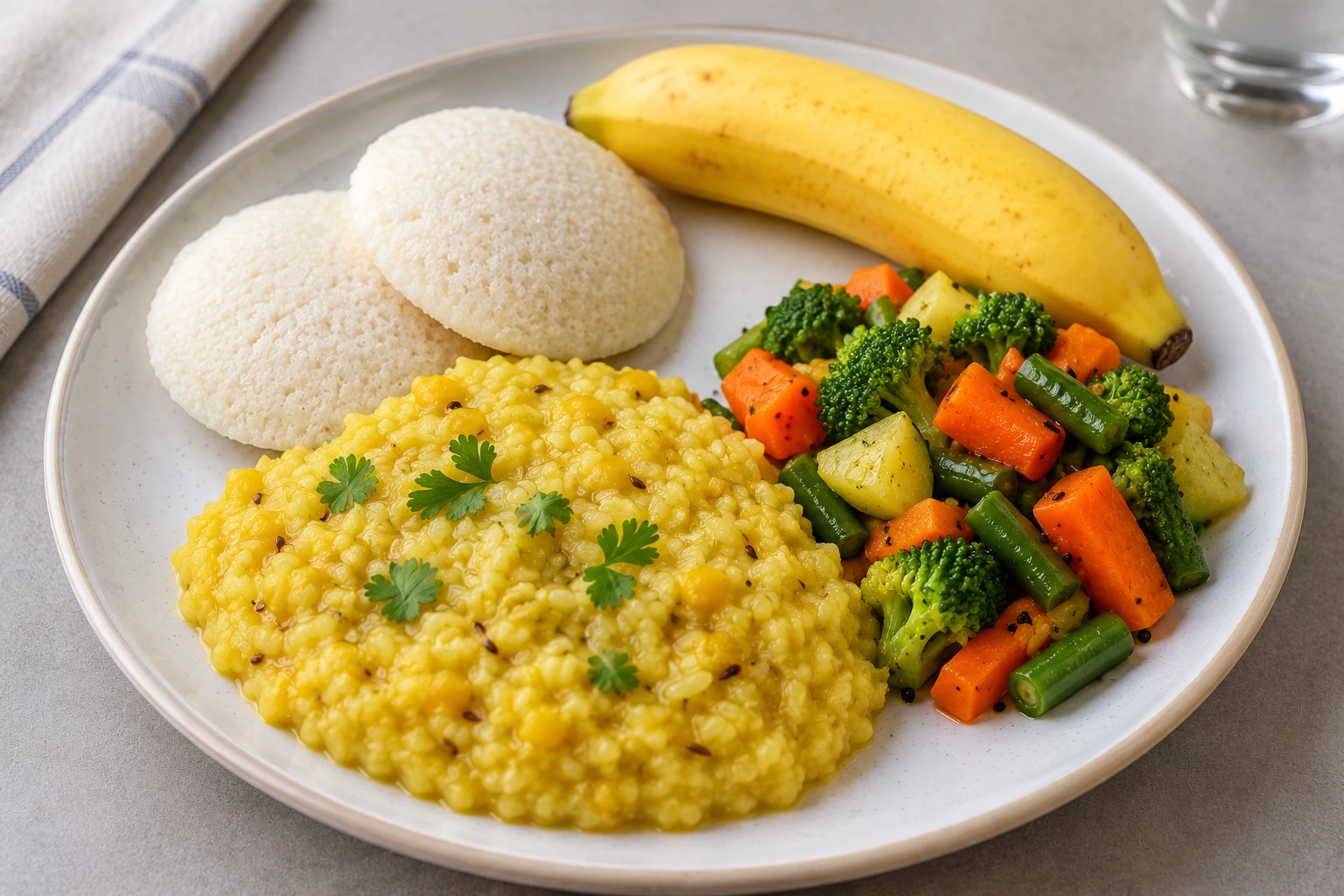
- Rice, idli, oats and khichdi
- Whole grains such as ragi or wheat, as tolerated
- Bananas, papaya and other fruit that sits well
- Cooked vegetables and clear soups
- Lean chicken, fish and dal
- Eggs, depending on individual tolerance
- Low-fat curd or buttermilk, if dairy suits you
- Moderate portions of healthier fats, such as a little oil, nuts or seeds
Raw salads and very high-fibre foods can cause gas early on, so cooked options may feel easier at first.
Foods to Avoid After Gallbladder Surgery
Foods to avoid after gallbladder surgery are mostly those heavy in fat, at least initially. Some people find these harder to tolerate:
- Deep-fried snacks such as pakoras, samosas and puris
- Very fatty or processed meats
- Cream-heavy gravies and rich sauces
- Large amounts of butter or ghee
- Rich desserts and greasy fast food
- Very large meals of any kind
None of these is universally forbidden, and most do not need to be avoided permanently. Spicy food is not automatically off the table either. Limit it only if it clearly triggers symptoms or your surgeon has advised otherwise.
Can I Eat Fatty Food After Gallbladder Surgery?
Can I eat fatty food after gallbladder surgery? Often, yes, but gradually. Many people reintroduce dietary fat after recovery without difficulty, though a large amount in one sitting may cause cramps, bloating or loose stools in some individuals.
A practical approach is to bring fat back in small portions, one change at a time. Cooking with a modest amount of oil or adding a little ghee or a few nuts to a meal usually goes down better than one very heavy dinner. Favour healthier sources such as nuts, seeds and vegetable oils over repeated deep-frying. Cutting out all fat permanently is neither necessary nor advisable for most people.
Post Cholecystectomy Diet: How to Return to Normal Eating
A post cholecystectomy diet does not have to be strict or permanent. Smaller meals are often easier at first because the intestine receives bile steadily rather than in bursts. Once you feel comfortable, add one new food or one slightly richer meal at a time and watch how you feel over the next day or two.
Tolerance to fat and fibre differs a great deal, so your pace may be quicker or slower than someone else’s. If a food repeatedly upsets you, set it aside for a few weeks and try a smaller portion later. A severely restrictive long-term diet is not automatically needed.
What Should I Eat If I Have Diarrhoea After Gallbladder Removal?
If you have loose stools, a gallbladder removal diarrhea diet is mostly about calming things down while your body adjusts. Helpful steps include:
- Eating smaller meals
- Temporarily cutting back on very fatty foods
- Drinking enough fluids
- Raising fibre gradually, according to tolerance
- Avoiding foods that clearly make it worse
- Keeping a simple food and symptom diary
Loose stools that are severe, continue for longer than expected, or come with dehydration, blood or weight loss need medical assessment, because diet is not the only possible cause. Please do not start anti-diarrhoeal or other medicines without advice from your doctor.
Life After Gallbladder Removal
Life after gallbladder removal is, for most people, close to normal. Many return to their routines and a varied diet once they have recovered. Balanced meals, gentle activity once your surgeon says it is safe, and keeping follow-up appointments all help.
Some people stay a little sensitive to very rich food, while others notice nothing at all. Neither is unusual. Many who have early symptoms find them settle over time, but nobody can promise a particular outcome. For the surgical side of healing, see our guide to laparoscopic gallbladder surgery recovery .
Gallbladder Surgery Recovery Diet: A Practical Approach
A gallbladder surgery recovery diet is easiest to picture in three loose stages, without fixed timelines.
Early recovery
- Smaller meals and simple foods if you prefer
- Plenty of fluids
- Avoiding very heavy meals
Gradual reintroduction
- Expanding the variety of foods
- Observing your own tolerance
- Gradually increasing fibre
- Bringing fats back in moderate portions
Longer-term eating
- Balanced meals with vegetables and fruit
- Whole grains and lean protein
- Healthier fats in sensible amounts
- Less reliance on highly processed foods
Your surgeon’s postoperative instructions and your individual medical situation always take priority over general guidance.
What Can I Eat in the First Few Days After Gallbladder Removal?
In the first few days, most people do best with light, easily digestible food: soups, rice, oats, idli, bananas, cooked vegetables and small portions of lean protein such as dal or eggs, as tolerated. Sip fluids through the day and add foods slowly rather than all at once. Instructions vary between surgeons and patients, so follow the diet advice you were given at discharge.
When Should You Contact a Doctor After Gallbladder Removal?
Please seek prompt medical advice if you notice:
- Severe or worsening abdominal pain
- Persistent vomiting or inability to keep fluids down
- Fever
- Yellowing of the skin or eyes
- Significant or persistent diarrhoea
- Blood in the stool, or black, tarry stools
- Increasing abdominal swelling
- Signs of dehydration, such as dizziness or very little urine
- Symptoms that are getting worse instead of gradually improving
These do not always mean a serious complication, and many have simple explanations. Still, they deserve to be checked rather than managed with diet changes alone. Severe symptoms need urgent care.
Gallbladder Surgery and Diet in Bangalore
If you are recovering in Bangalore and struggling with food intolerance, persistent bloating, abdominal discomfort or ongoing digestive changes, your first point of contact should be the surgeon who operated on you. If you would like another opinion, a qualified general or laparoscopic surgeon can review your symptoms and history.
Dr. Srihari Shapur is a general and laparoscopic surgeon with an MBBS, MS in General Surgery, FIAGES, a Fellowship in Endoscopy and a Diploma in Minimal Access Surgery. His website lists consultations at ARC Cancer Hospital on Hosur Main Road, Wilson Garden (Monday to Saturday, 4:00–6:00 PM) and at Medax Hospitals, Gottigere (Monday to Saturday, 7:00–8:30 PM), which serve patients across South Bangalore. Timings can change, so please call ahead. Patients who have not yet had surgery can read about gallbladder stone surgery in Wilson Garden .
Not everyone needs an appointment, and many people settle with time and gentle dietary adjustment. If your symptoms are persistent or worrying, a conversation with a surgeon is a sensible next step.
